Choose Mandarin in the booking form and tell us your syllabus code.
01
Share your course
Tell us your syllabus code, exam year and where you need help.
02
Try a one-hour lesson
Work through schoolwork or exam tasks with your tutor.
03
Decide what comes next
Review your feedback and agree what to practise next.
CENTRAL · ONLINE · YOUR LOCATION
IGCSE Chinese lesson prices
Flexible private lessons in Central, online or at your location. Start with a one-hour trial to assess your level and discuss support for schoolwork and IGCSE exam preparation.
Share your syllabus code, level and availability. We’ll look for a suitable classmate and confirm the timetable before payment. Summer study and winter revision are available on request.
Two learners at our Central office: HK$3,000 per learner for 10 hours (HK$300 per hour each).
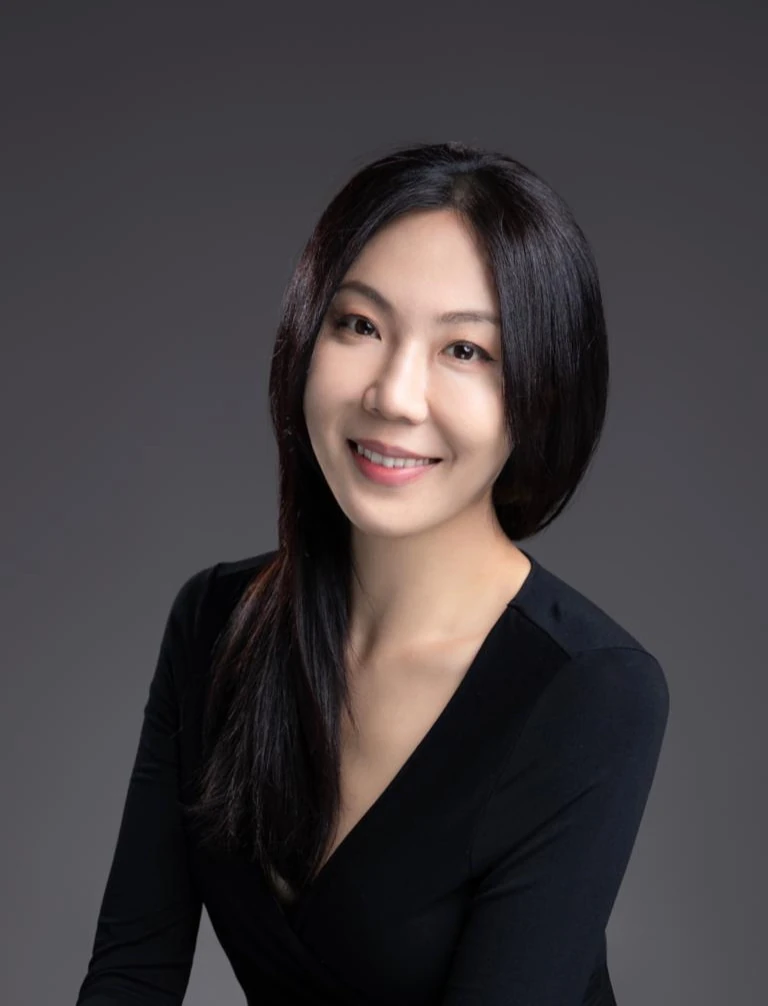
Aileen Ting has taught Cambridge IGCSE Mandarin Chinese (0547) for over 10 years. Private lessons cover Cambridge 0547, Cambridge 0523 and Pearson Edexcel 4CN1.
Students we’ve supported
GSIS, WIS, Kellett and other international schools.
Bring your schoolwork
Bring your schoolwork or teacher feedback. We’ll look at where you got stuck, then practise the skill you need, whether that’s structuring a written answer, catching details in listening or answering speaking questions naturally.
More about lesson support
Understand what needs changing in your work and why.
Develop writing structure, vocabulary, accuracy and text-type control.
Practise the speaking tasks for your syllabus, with useful follow-up feedback.
Use textbooks and past-paper tasks suited to your school course and level.
Jeanie Jang said her daughter, who came from a family with no Mandarin-speaking background, moved from the Band 4 Foreigners’ Class to Band 3 at CIS within a year.
Course choices, exam preparation and practical lesson information.
How much does an IGCSE Chinese tutor cost in Hong Kong?
IGCSE Chinese tutoring prices depend on the tutor’s experience, qualifications and lesson format.
As an indicative market guide, secondary tutoring can be around HK$500–700 per hour; specialist GCE/IGCSE and DSE support around HK$600–800, with some top tutors charging up to HK$1,800. Rates vary by provider.
Travel and printed materials may cost extra. Check the full quote before booking.
Our private IGCSE Chinese fees
Lesson
Total
One-hour trial
HK$450
Single hour
HK$650
10 hours
HK$5,500
20 hours
HK$10,000
30 hours
HK$13,500
See lesson prices above for current travel fees and materials.
What is Cambridge IGCSE Mandarin Chinese, Foreign Language (0547)?
Cambridge 0547 is Mandarin Chinese as a foreign language, focused on practical everyday communication.
Usually studied at ages 14–16, depending on the school system.
Is Cambridge IGCSE Chinese as a Second Language (0523) difficult?
0523 can be challenging because it is a second-language course, rather than a beginner foreign-language course.
Reading and Writing: two hours, worth 60%, including information transfer, short answers, functional writing and extended writing.
Speaking: a 2–3 minute presentation, discussion and general conversation in Mandarin.
Students need to understand implied meaning, respond to ideas and express viewpoints clearly.
It usually suits students with a solid base who can already write and speak confidently in full sentences.
What HSK level is IGCSE Chinese as a Second Language (0523)?
From my tutor experience, 0523 is around strong HSK 4, with higher scorers sometimes overlapping early HSK 5. This is a teaching estimate, not an official conversion.
The tests assess different skills; older HSK formats do not test speaking in the same way.
The two-hour Reading and Writing paper needs speed, accuracy and structured answers.
A spoken presentation and follow-up discussion need specific preparation, even for students with an HSK 4 or 5 result.
What is Pearson Edexcel International GCSE Chinese (9–1) (4CN1)?
Pearson Edexcel 4CN1 is an International GCSE Chinese qualification, usually for ages 14–16, graded 9–1.
It is a linear qualification: all three externally examined papers are taken at the end of the course.
4CN1 assessment
Paper
Time
Weight
1 · Listening
30 min + 5 min reading
25%
2 · Reading and Writing
1 hr 45 min
50%
3 · Speaking
8–10 min
25%
Reading and Writing includes two writing tasks and a four-sentence translation into Chinese.
Speaking includes picture-based discussion and two topic conversations selected using Pearson’s randomisation grid.
Speaking entries are available in Mandarin or Cantonese.
Traditional and simplified character papers are available.
The overall subject mark determines the grade; individual papers are not graded separately.
What HSK level is Pearson Edexcel International GCSE Chinese (9–1) (4CN1)?
There is no official Pearson HSK conversion for 4CN1. From my tutor experience, the topics and grammar can feel close to HSK 3–early HSK 4, but strong HSK 4-level control helps with exam performance.
Tutor’s rough HSK guide · not official equivalence
Benchmark
What it may mean for preparation
HSK 3
Familiar topics, but timed writing, translation and speaking structure may need work.
Solid HSK 4
Often a useful starting point for 4CN1 preparation.
Early HSK 5 strengths
Extra speed, language range and accuracy can support higher-level performance.
How hard is Pearson Edexcel International GCSE Chinese (9–1) (4CN1)?
4CN1 can feel demanding for non-native learners, particularly when school time and individual feedback are limited.
Less time for Chinese at school can slow progress.
Writing and speaking errors can repeat without correction.
Low motivation can reduce practice.
Reading and Writing is worth 50% and includes two writing tasks plus translation.
The 8–10 minute speaking test includes a picture task and two topic conversations, with some topics allocated through Pearson’s randomisation process.
How quickly can tutoring improve my IGCSE Mandarin grade?
In my teaching experience, students can show improvements within a few lessons, with clearer grade progress over a semester.
Parents and school teachers may notice changes in confidence, interest and participation.
Progress depends on the student’s starting level, attendance and practice.
This reflects teaching experience, not a promised timeline or grade increase.